

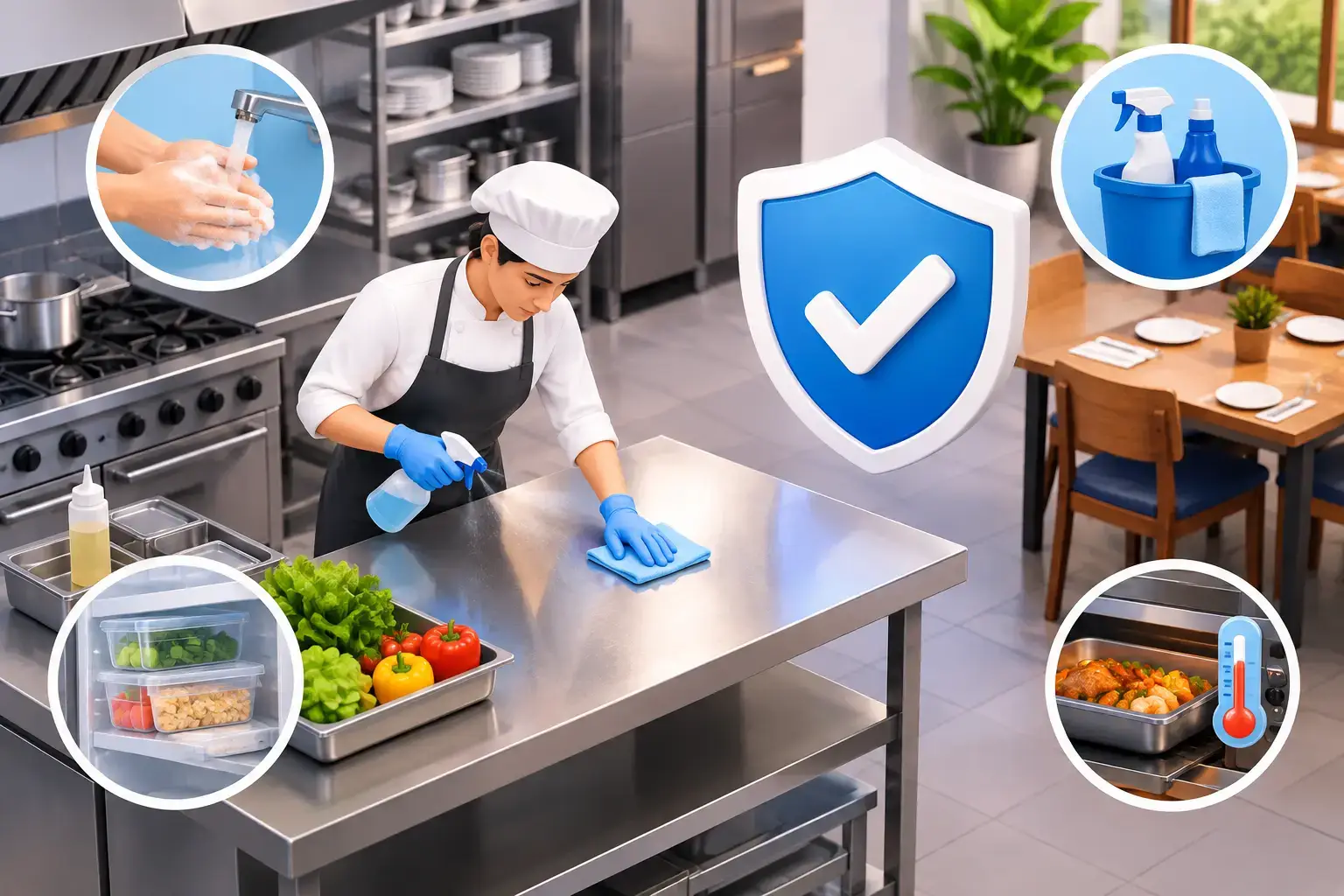
The busiest service can hide the earliest signs of a sanitation problem: a sticky fridge handle, crumbs beneath a bench, a cloth used across too many surfaces, or a bin emptied too late. A reliable restaurant sanitation guide turns those small details into clear routines, helping cafés and restaurants protect food safety, maintain a welcoming dining space, and give staff confidence during every shift.
For restaurant owners and managers, sanitation is not a once-a-week deep clean. It is a practical system that covers how people wash hands, store food, clean equipment, manage waste and reset the premises after service. The right standard will depend on your menu, kitchen size, trading hours and customer volume, but consistent habits are essential in every venue.
Why sanitation affects more than the kitchen
Customers may never see the inside of a cool room or the underside of a prep bench, but they notice the signals of care. Clean tables, odour-free washrooms, polished entry glass and tidy floors shape their confidence before the first plate arrives. Behind the scenes, sanitation reduces the risk of cross-contamination, pest activity, unpleasant odours and expensive disruptions to service.
For New Zealand food businesses, sanitation also supports the procedures set out in your food control plan or national programme. Your specific obligations can vary by business type and local council requirements, so cleaning routines should work alongside your documented food-safety processes rather than replace them. A checklist is useful, but only if staff understand why each task matters and have time to complete it properly.
There is a trade-off to manage. Cleaning too quickly during a rush can leave grease, food residue and bacteria behind. Closing early to complete every task can affect revenue. The practical answer is to divide jobs between opening, service, closing and scheduled deep-cleaning duties, so critical areas are never left until they become a larger problem.
Restaurant sanitation guide: build routines by zone
A restaurant is easier to keep clean when it is treated as separate zones with different risks. The same approach and cloth should not move freely from a washroom to a dining table or from raw-food preparation to ready-to-eat food areas.
Food preparation and cooking areas
Start with surfaces that come into contact with food. Benches, chopping boards, knives, mixers, slicers and utensils should be cleaned to remove visible debris, then sanitised using a food-safe product at the correct dilution and contact time. Sanitising a dirty surface is less effective, so the cleaning step cannot be skipped.
Colour-coded cloths and equipment can help staff avoid accidental crossover between tasks. Store cleaning chemicals away from ingredients and clearly label bottles, including diluted solutions. Never decant chemicals into unmarked drink bottles or food containers.
Pay particular attention to high-touch points such as refrigerator handles, taps, oven controls, cupboard pulls, point-of-sale screens and door plates. These are easy to miss because they do not always look dirty, yet they are handled repeatedly throughout a shift.
Grease also deserves a planned response. Splashbacks, rangehood surrounds, fryer exteriors and walls near cooking equipment collect residue over time. Daily wiping helps, but periodic degreasing is needed to prevent buildup that can affect hygiene, create odours and increase fire risk. The frequency depends on your cooking style: a coffee-focused café will have different needs from a high-volume takeaway kitchen.
Refrigeration, storage and dishwashing
Cold storage needs daily visual checks as well as regular cleaning. Wipe spills immediately, remove expired or damaged stock, and keep food covered, labelled and stored in a way that prevents drips onto other products. Raw foods should be separated from ready-to-eat items. Shelves, seals, handles and floors beneath units require attention too, especially where condensation or crumbs collect.
A dishwasher only supports sanitation when it is working correctly. Staff should clear food scraps from plates, avoid overloading racks, check that wash and rinse cycles are operating as intended, and clean filters at the required interval. Glasses and crockery should air-dry where possible rather than being dried with a questionable tea towel.
Dry stores are often overlooked because they feel lower risk. Keep shelves orderly, rotate stock, clean up spills promptly and leave enough space for checks behind and beneath shelving. Good storage practices make it easier to identify pest activity before it becomes a serious issue.
Dining areas, counters and washrooms
Front-of-house cleaning should happen throughout the day, not only after customers leave. Clear and wipe tables between guests, sanitise shared menus or table devices where relevant, and sweep visible debris before it gets carried through the venue. Entry doors, counter edges, EFTPOS terminals and chair backs may need several touch-ups during peak periods.
Washrooms carry a different type of risk and need their own dedicated equipment. Refill soap, paper products and sanitiser before they run out, disinfect touchpoints, clean toilets and basins thoroughly, and keep floors dry. A washroom that is clean at opening but neglected after lunch service can quickly affect a guest’s view of the entire restaurant.
Floors should be swept or vacuumed before mopping. Mopping over food scraps or grease simply spreads soil around. Use the right solution for the surface, display wet-floor signage while working, and allow sufficient drying time to reduce slip hazards for staff and guests.
Give staff a system they can follow
Even premium cleaning products cannot compensate for unclear responsibilities. Every shift needs a simple handover: who checks the washroom, who empties bins, who restocks hand soap, who cleans the coffee machine, and who signs off the closing list. Assigning tasks does not mean blaming staff. It gives people certainty and makes gaps visible before they affect service.
Hand hygiene should be reinforced in practical terms. Staff need to wash hands after handling raw food, rubbish, cleaning chemicals, phones, money, their face or hair, and after using the washroom. Gloves can be useful for particular tasks, but they are not a replacement for handwashing. Gloves that touch a dirty surface can transfer contamination just as easily as bare hands.
Training works best when it is part of the job, not a folder read once at induction. Show new team members where cleaning supplies belong, explain which cloths are used in each zone, demonstrate chemical dilution, and check their routine during the first weeks. Short refreshers before a busy season, menu change or staff turnover can prevent standards from drifting.
Plan for deep cleaning before problems build up
Daily cleaning keeps a venue presentable, but it rarely reaches every area that needs attention. Behind appliances, beneath heavy benches, inside grease-prone equipment, high ledges, exhaust surrounds, windows, upholstery and tiled grout can all build up soil over weeks or months.
A planned deep clean helps protect the condition of the property and equipment while making daily cleaning easier. It may be scheduled monthly, quarterly or around quieter trading periods, depending on how heavily the premises is used. For example, a restaurant with a large open kitchen, fryer line and constant delivery traffic will generally need more frequent specialist attention than a small daytime café.
Professional support is particularly useful when work needs to be completed outside trading hours, when grease and hard-to-reach areas require specialised equipment, or when managers need a consistent standard across several sites. Certified, experienced and fully insured cleaners can work to a tailored scope, allowing restaurant teams to focus on food and service rather than trying to fit major cleaning jobs between shifts.
Keep records that lead to action
Cleaning records are most useful when they reflect real work. A clipboard with every box ticked at the same time each night will not help if the bin room smells or the fridge seals are dirty. Build checks around visible outcomes: benches are clean and sanitised, waste has been removed, washroom supplies are stocked, floors are safe, and equipment has been reset.
Managers should inspect different areas regularly rather than checking only the dining room. Ask staff what makes cleaning difficult. It may be a lack of storage, damaged equipment, an unrealistic closing roster or products that are not suited to the surface. Fixing these practical barriers improves compliance far more than adding another checklist.
Cleanliness is felt before it is analysed. When every shift leaves the restaurant ready for the next one, staff work with more confidence and customers can focus on the meal in front of them. That is the standard worth protecting, one well-planned routine at a time.