

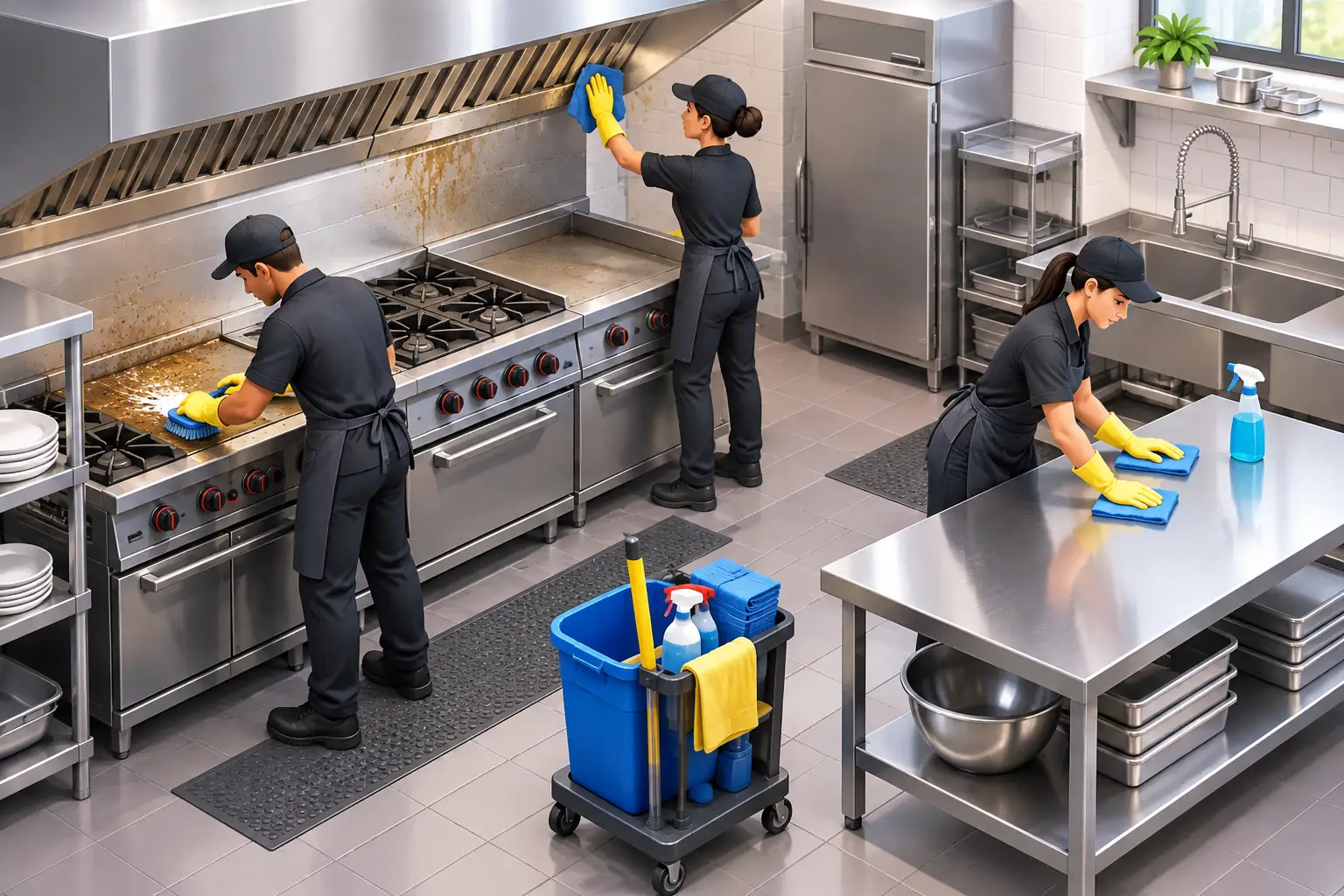
The hard-to-reach areas behind a fryer, beneath a grill and above an exhaust canopy can tell a very different story from a spotless dining room. To clean a greasy restaurant kitchen properly, the work needs to remove built-up oil without disrupting service, damaging surfaces or simply moving grease from one area to another.
For restaurant, café and hospitality operators, grease control is about more than presentation. It affects kitchen safety, food preparation hygiene, staff confidence and the life of your equipment. A clear routine, supported by periodic professional deep cleaning, helps keep the back of house as dependable as the service your customers experience out front.
Why grease needs prompt attention
Cooking grease does not stay where it lands. Steam carries fine airborne oil onto walls, ceiling tiles, light fittings, fridge exteriors, shelving and floors. As it cools, it forms a sticky film that traps dust, crumbs and other contaminants. What starts as a light coating can quickly become hard, dark residue that takes far more time and product to remove.
The immediate concern is slip risk. Greasy floors around fryers, grills, dishwashing areas and preparation benches can make a busy shift less safe, particularly when staff are carrying hot food or heavy trays. Grease near heat sources and within extraction systems also needs careful attention because it can contribute to fire risk.
There is an operational cost too. Greasy appliance surfaces are harder to maintain, kitchens can develop lingering odours, and staff may spend valuable prep time trying to recover areas that should have been cleaned at the end of the previous shift. Regular care is usually more cost-effective than waiting for a full restoration clean.
Start with a safe, workable cleaning plan
A kitchen should be cleaned when equipment is cool enough to handle safely and when the work can be completed without cross-contaminating food or interrupting active preparation. For many venues, this means a detailed close-down clean, with deeper work planned before opening, after closing or during quieter trading periods.
Before applying any degreaser, clear exposed food, clean utensils and disposable packaging from the area. Switch off and isolate equipment as required by the manufacturer, and use appropriate personal protective equipment. Strong degreasers can irritate skin and eyes, while electrical components, pilot lights and sensitive controls need a more cautious approach than a stainless-steel splashback.
It also pays to work from high to low. Start with canopy surrounds, walls and shelves, then benches and equipment exteriors, and finish with the floor. This prevents loosened grime from falling onto already-cleaned areas.
Match the product to the surface
A commercial kitchen degreaser can be highly effective, but stronger is not always better. Follow the dilution and dwell-time instructions, and check that the product is suitable for the surface. Aluminium, painted finishes, natural stone and some floor coatings can be damaged by harsh chemicals or abrasive pads.
For stainless steel, apply product to a cloth rather than spraying freely around controls and vents. Wipe with the grain where visible, rinse away chemical residue where required, then dry the surface to reduce streaking. Never mix cleaning chemicals. Combining products can create dangerous fumes and makes it harder to know what has been applied to food-adjacent surfaces.
How to clean greasy restaurant kitchen equipment
The most effective process is systematic. Instead of cleaning only what is visible, use zones so every shift covers the same priority areas and no section is overlooked.
Begin with cookline surfaces. Remove loose crumbs and food debris, then apply an appropriate degreaser to cooled splashbacks, control panels, external panels and surrounding walls. Allow it to work for the recommended time, agitate stubborn residue with a non-scratch pad or brush, and wipe away the lifted soil using clean cloths. A final rinse or wipe-down may be needed, depending on the product instructions.
Grills, chargrills and fryers require equipment-specific methods. Do not flood electrical parts, pour cold water onto hot surfaces or scrape in a way that damages coatings. Filter or change fryer oil in line with your operating procedures, clean exterior surfaces daily and schedule professional servicing or deep cleaning when grease has accumulated in difficult areas.
Do not overlook smaller touchpoints. Fridge handles, microwave controls, oven handles, trolley rails, storage container lids and door push plates receive frequent contact. They need regular cleaning and sanitising, even when they do not look greasy.
Floors, drains and the areas people miss
Kitchen floors need more than a quick mop. First sweep or vacuum dry debris, paying close attention to corners, under benches and behind movable equipment. Apply a suitable floor degreaser, allow enough contact time, scrub where traffic has compacted grease, then remove the dirty solution rather than spreading it across the floor. Rinse where appropriate and leave the surface dry before staff return.
Floor mats should be lifted and cleaned underneath, not merely mopped around. Drains and drain covers also need a planned routine. Food particles and grease can create unpleasant odours and slow drainage, so remove visible debris safely and use cleaning methods suitable for your plumbing system.
The areas most often missed are usually the ones that build up grease fastest: wall edges behind equipment, the tops of refrigeration units, legs and castors, underside of benches, shelving brackets, exhaust surrounds and the gap between equipment and walls. Moving equipment safely during scheduled deep cleans is often the only way to reach these locations properly.
Set daily, weekly and deep-clean responsibilities
A cleaning checklist is useful only when it reflects how your kitchen actually operates. A compact café with a small cookline has different needs from a high-volume restaurant, hotel kitchen or takeaway venue. Build the routine around equipment use, trading hours and grease levels rather than adopting a generic schedule.
Daily tasks should generally cover cookline wipe-downs, benches, handles, splashbacks, floor cleaning and rubbish removal. Weekly work may include walls, fridge exteriors, shelving, movable equipment and more detailed floor scrubbing. Extraction filters, canopy areas, ceiling surfaces and behind-equipment cleaning often need a deeper schedule based on cooking volume and the type of food prepared.
Assign responsibilities by zone, record completion and make it easy for supervisors to check the result. A vague instruction to “clean the kitchen” leaves room for inconsistent standards. Clear tasks such as “degrease the wall behind the grill” or “clean beneath the fryer mat” create accountability and make handovers simpler.
When a professional deep clean makes sense
Some grease build-up is beyond a standard close-down clean. If walls feel tacky after wiping, floor grout remains dark, odours persist, equipment cannot be moved safely, or grease has collected around extraction areas, it may be time for specialist support.
Professional hospitality cleaning can be scheduled around your service hours and tailored to your kitchen layout. The right team will assess the surfaces, use suitable products and equipment, and focus on neglected areas without treating every material the same. For operators managing multiple property needs, Clean Bees can provide customised commercial cleaning support with certified, experienced and fully insured professionals, quality supervision and flexible scheduling across Auckland, Hamilton and Wellington.
There is a trade-off to consider. A deep clean takes planning and may require access during closed hours, but it can reduce pressure on staff, improve the working environment and make the daily routine more manageable. It also gives managers a clearer baseline to maintain between professional visits.
Keep the result from slipping away
The best way to prevent another heavy grease build-up is to make cleaning part of the kitchen’s operating rhythm, not an occasional rescue job. Keep the right products accessible, replace worn pads and mop heads, train new staff on each zone and respond early when a surface starts to feel sticky.
A clean kitchen supports safer shifts, more confident staff and a better impression when suppliers, inspectors or customers see behind the scenes. Give grease the attention it needs after every service, and your kitchen will stay easier to run when the pressure is on.