

A few dark marks around a window frame can quickly become a bigger problem in a New Zealand home. Effective mould removal methods do more than brighten a wall or ceiling. They remove surface growth safely, reduce the moisture that allowed it to grow, and help protect the people living or working in the space.
Mould is common in Auckland, Hamilton and Wellington properties, particularly through wet winters, in older homes, and wherever condensation or leaks are left unchecked. The right response depends on how much mould is present, what surface it is on, and whether the underlying moisture source has been fixed. Cleaning without addressing that cause often means the mould returns.
Start by finding the moisture source
Mould needs moisture, a suitable surface and time to establish. Bathrooms, laundries, kitchens and bedrooms are frequent trouble spots, but it can also form behind furniture against cold exterior walls, around poorly sealed windows, beneath leaking roofs, or inside cupboards with limited airflow.
Before choosing a cleaning product, look for the reason the area has stayed damp. Condensation on windows, a dripping pipe, blocked gutters, damaged flashing, poor underfloor ventilation and wet clothing dried indoors can all contribute. In rental homes, tenants should report leaks, persistent dampness or ventilation faults promptly. Landlords and property managers should arrange repairs before expecting cleaning alone to solve a recurring issue.
If the wall, carpet, insulation or timber feels wet, smells musty, is swollen or has visible water staining, treat it as a moisture problem first. A professional inspection may be needed to identify hidden leaks or water damage.
Mould removal methods for small surface areas
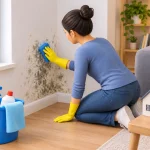
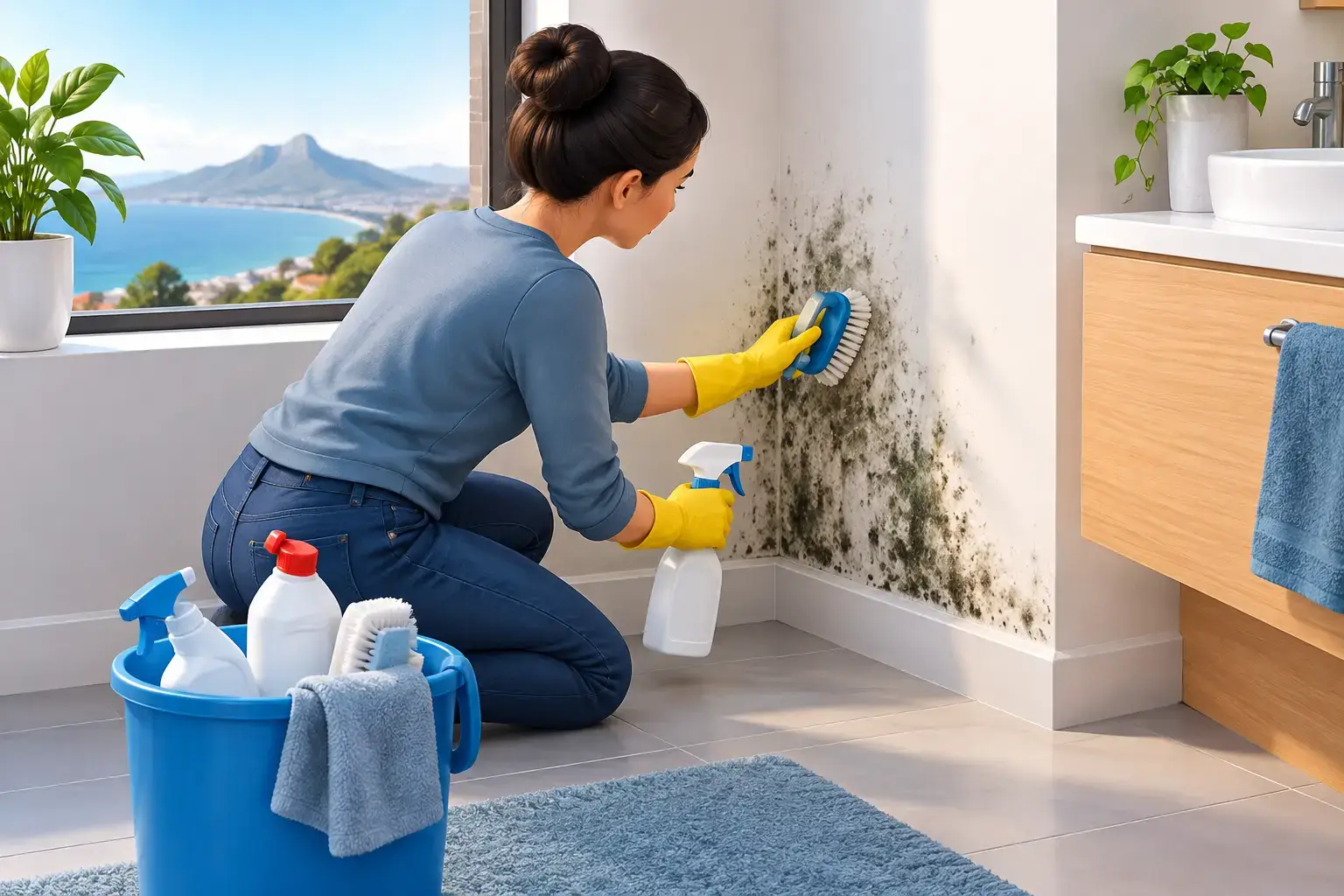
For a small, contained patch of mould on a hard, non-porous surface, careful DIY cleaning can be appropriate. This usually includes areas such as bathroom tiles, sealed shower screens, window frames, painted surfaces in sound condition, and some benchtops. Avoid dry brushing or scraping mould, as this can send spores into the air.
Open windows and doors where possible, and keep children, pets and anyone with asthma or respiratory sensitivities away from the work area. Wear gloves and eye protection. A well-fitted mask is sensible when dealing with mould, particularly in an enclosed bathroom or cupboard.
A detergent-based cleaner and warm water are often suitable for washable hard surfaces. Apply the cleaner to a damp cloth or sponge rather than spraying heavily into the air, wipe the mould away, rinse the cloth regularly, then dry the surface thoroughly. The key step is drying. A clean surface that remains damp can become mouldy again quickly.
Some households use diluted white vinegar or a mould-specific cleaner. These can be useful in the right setting, but always follow the product directions and test a small, discreet area first. Products that contain bleach may lighten stains on tiles and other non-porous surfaces, but they can damage fabrics, grout, painted finishes and some metals. They also produce irritating fumes and should never be mixed with vinegar, ammonia or any other cleaning product.
For recurring bathroom mould, clean the affected surface, dry it fully, then improve the routine around the room. Run the extractor fan during showers and for a period afterwards, use a squeegee on shower glass, hang towels to dry with space around them, and repair failed silicone or grout where water is getting behind finishes.
When mould needs more than a wipe-down
Not every mould problem is a DIY job. Porous materials can hold mould beneath the surface, making a quick wipe ineffective. Plasterboard, untreated timber, carpet, curtains, upholstered furniture, ceiling insulation and soft furnishings may need specialist treatment, deep cleaning or removal, depending on the extent of contamination and water damage.
Professional help is the safer choice when mould covers a large area, keeps returning after cleaning, follows flooding or a significant leak, or is found inside an air-conditioning system. It is also advisable where there is a strong musty odour but no clear source, as mould may be present behind walls, under flooring or in roof spaces.
Take extra care in homes with babies, older people, people with compromised immunity, or anyone who has asthma, allergies or other breathing difficulties. Mould can irritate the eyes, skin, nose and throat, and may aggravate existing respiratory symptoms. In these situations, prompt removal and moisture control is a practical health measure, not simply a cosmetic clean.
The right approach for common surfaces
Different materials call for different mould removal methods. Using a harsh chemical on the wrong surface can leave permanent marks while failing to remove the growth properly.
Painted walls and ceilings
Light surface mould on intact paint can often be cleaned gently with a suitable detergent solution and a soft cloth. Do not saturate plasterboard, as extra water can worsen the problem. Dry the area immediately with ventilation or gentle airflow.
If paint is bubbling, plaster is soft, staining is spreading, or the mould is repeatedly appearing in the same spot, stop cleaning and investigate for a leak or condensation issue. Repainting before the wall is dry and the cause is fixed only covers the evidence temporarily.
Tile, grout and silicone
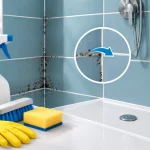
Tiles are generally easier to clean because they are non-porous, but grout and silicone are more vulnerable. Surface mould on grout may respond to a purpose-made cleaner and gentle agitation with a soft brush. Old silicone that is blackened through its depth may need to be removed and replaced after the surrounding area is dried and any ventilation issue is corrected.
Windows, frames and sills
Condensation mould around windows is common during colder months. Wipe condensation from glass and frames each morning where practical, clean mould from the frame with a mild cleaner, and dry thoroughly. Keep curtains and blinds open for part of the day to encourage airflow and sunlight. Do not overlook timber frames, where ongoing moisture can lead to deterioration.
Carpets and soft furnishings
If carpet or upholstery has been wet for more than a short period, surface cleaning may not be enough. Lifted edges, a damp underlay, musty smells or visible growth suggest moisture is trapped below. Professional carpet cleaning can help in some cases, but materials affected by extensive mould or contaminated water may need replacement. The decision depends on the source of water, how long it was present, and whether the item can be dried completely.
Prevent mould from coming back
The most reliable mould removal method is paired with a prevention plan. In homes, this usually means managing humidity, ventilation and maintenance together rather than relying on a single product.
Use extractor fans in bathrooms and kitchens, and check that they vent effectively rather than simply moving moist air into another enclosed space. Air rooms daily when weather allows, particularly bedrooms after sleeping. Keep furniture slightly away from exterior walls so air can circulate, and avoid overfilling wardrobes and cupboards.
A dehumidifier can be worthwhile in rooms that regularly feel damp, but it should support, not replace, repairs or ventilation. Heat rooms consistently where possible, as warmer air and insulated surfaces are less likely to hold condensation. Dry washing outside when conditions permit, or use a vented dryer or well-ventilated laundry rather than placing racks through living areas.
Outside, clean gutters, check downpipes, keep drainage flowing away from the building, and address roof or cladding damage promptly. Exterior maintenance has a direct effect on indoor comfort. Water entering a property can create mould long before a stain is visible on an internal wall.
Choosing professional mould cleaning
For landlords, property managers and busy households, professional cleaning provides reassurance when the job requires more than everyday products. A trained team can assess the visible area, select suitable products for the material, work carefully around occupied spaces, and flag signs that a repair or further investigation is needed.
Clean Bees can support Auckland, Hamilton and Wellington properties with customised cleaning and property-care services, including detailed cleaning for mould-affected areas where appropriate. Certified, experienced and fully insured professionals work to a supervisor-led quality process, helping clients prepare homes for inspections, maintain comfortable workplaces, and deal with cleaning tasks before they become larger disruptions.
A fresh-smelling room is encouraging, but the real goal is a dry, well-ventilated space that stays that way. Deal with the moisture source early, choose a cleaning method that suits the surface, and seek professional support whenever mould is widespread, persistent or linked to water damage.