

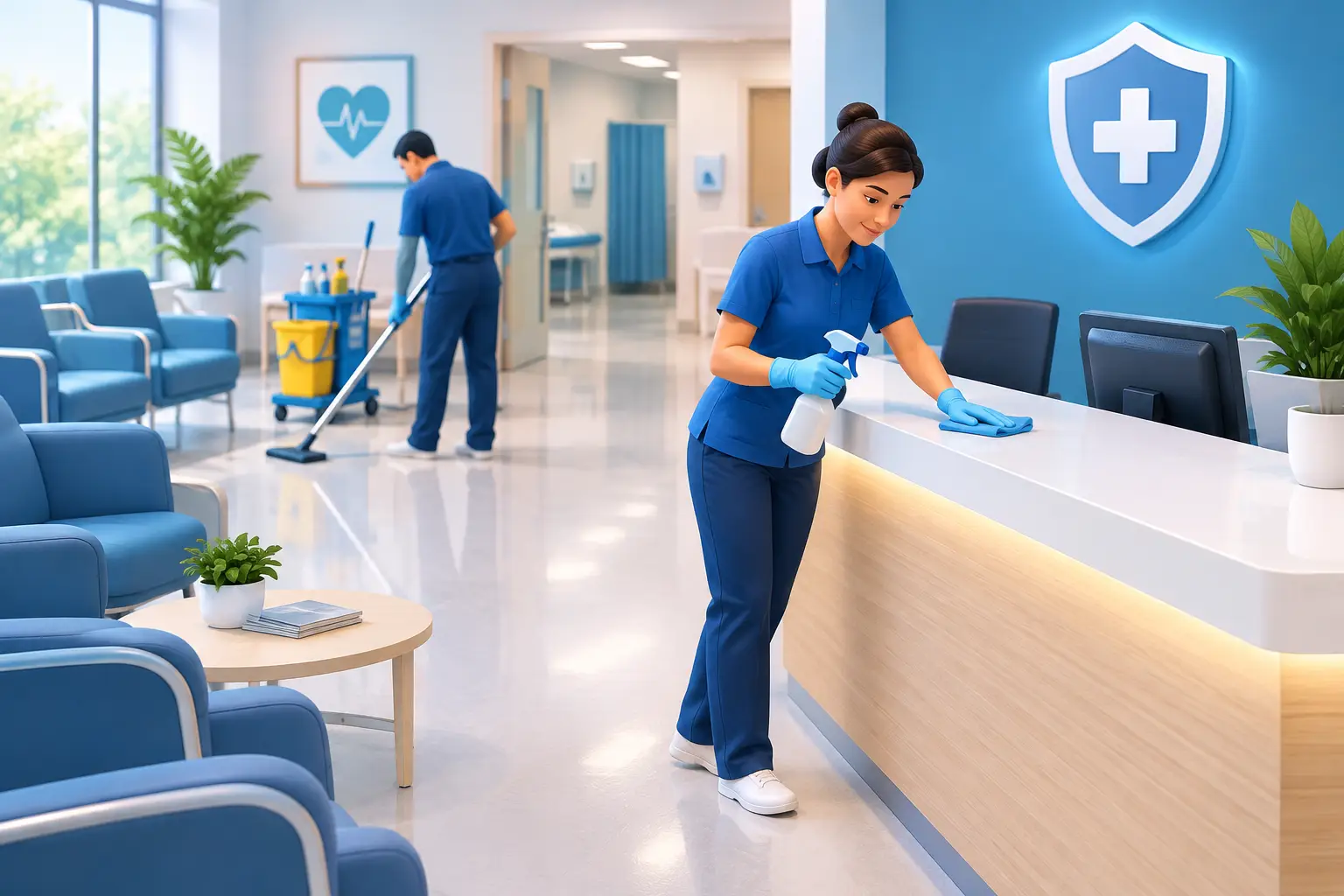
The moment a patient walks through reception, they begin forming an opinion about the care they will receive. Marks on glass, overflowing bins, dusty ledges or untidy bathrooms can quickly undermine confidence. Professional medical centre cleaning services help practices create a calm, hygienic and welcoming environment for patients, staff and visitors – without disrupting a busy day of appointments.
For medical practices across Auckland, Hamilton and Wellington, cleaning is not simply a presentation task. It supports safer day-to-day operations, helps protect high-contact areas and gives your team one less operational concern to manage. The right cleaning plan should fit the way your centre actually works, from early-morning patient flows to late clinics and weekend sessions.
Why Medical Centre Cleaning Needs a Different Approach
A medical centre is not an ordinary office. It has waiting rooms where many people may sit each day, consultation rooms that need careful attention between use, staff areas, bathrooms, treatment spaces and high-touch surfaces throughout the building. Each zone has a different level of use, different materials and different cleaning priorities.
A reliable service begins with a site assessment rather than a one-size-fits-all checklist. The number of rooms, patient volume, opening hours, flooring, waste arrangements and the services delivered at the centre all affect what should be cleaned, how often and when it can be done. A small GP clinic may need daily cleaning and frequent attention to reception touchpoints, while a larger multidisciplinary practice may require a more detailed scheduled programme across several floors or tenancies.
Cleaning professionals should also work respectfully around privacy. Patient records, equipment, consultation spaces and personal belongings must be treated with care. Teams need clear access instructions, security processes and a practical understanding of which areas cannot be interrupted during clinical hours.
The Areas Patients Notice First
Patients may not see every part of your cleaning programme, but they notice the areas that shape their visit. Reception counters, entrance doors, waiting-room chairs, bathrooms and floors carry a large share of that first impression. These spaces also receive consistent use throughout the day, so they should be considered in both routine cleaning and touchpoint schedules.
Reception and waiting rooms
Reception is where practical cleanliness meets patient confidence. Floors should be vacuumed or mopped as appropriate, glass should be free of fingerprints, and desks and counter surfaces should be cleaned carefully around technology, paperwork and signage. Chairs, armrests, tables, door handles and EFTPOS areas may need frequent attention depending on the volume of patients.
The aim is not to make a clinic feel sterile or impersonal. It is to keep the environment orderly, fresh and cared for, so patients can focus on their appointment rather than what is on the floor or the surface beside them.
Consultation and treatment rooms
These rooms call for clear boundaries between cleaning support and clinical responsibilities. A commercial cleaning team can clean floors, remove general rubbish as agreed, dust accessible surfaces and complete other scheduled work. Clinical staff remain responsible for any specialised infection prevention procedures, medical equipment and protocols required between patients.
That distinction matters. A good provider will follow the centre’s instructions, use suitable products for the relevant surfaces and communicate openly about what sits within the cleaning scope. Clear responsibilities reduce assumptions and help the whole team work more confidently.
Bathrooms, staff rooms and shared facilities
Bathrooms require close attention to basins, taps, dispensers, toilets, door hardware, mirrors and floors. They should be checked often enough to suit patient numbers, not just cleaned once at the end of the day. Staff kitchens and break rooms also deserve proper care. A clean staff space helps your people take a genuine break and supports a professional workplace culture.
Building a Cleaning Schedule Around Your Clinic
The best schedule depends on your operating hours and patient traffic. Many practices choose cleaning before opening, after closing or during quieter windows. This keeps disruption low while ensuring the centre is ready for the next session.
Daily cleaning commonly covers reception, waiting areas, bathrooms, staff facilities, general rubbish removal and floors. High-touch surface cleaning may be needed more regularly in busy areas. Weekly or periodic work can include detailed skirting-board cleaning, internal glass, carpet care, high dusting, deeper floor maintenance and hard-to-reach areas that routine visits do not cover.
Flexibility is valuable when circumstances change. Flu season, a particularly busy period, a spill, construction nearby or an unexpected inspection can all create a need for extra cleaning support. A provider with 24/7 availability can be especially helpful when the work cannot wait until the next regular visit.
What to Look for in Medical Centre Cleaning Services
Price matters, but the lowest quote does not always represent the best value for a healthcare setting. Consistency, accountability and the ability to respond appropriately are often more important than saving a small amount on each visit.
Look for a provider with certified, experienced and fully insured staff. They should be able to explain how they manage quality, who to contact if an issue arises and how cleaning instructions are recorded for your site. Supervisor-led checks are particularly useful for centres that need dependable standards across multiple rooms, shifts or locations.
It also helps to ask how the provider handles staffing continuity. Familiar cleaners can learn your access procedures, preferred cleaning times and priority areas. At the same time, a professional company should have systems that maintain service if a regular team member is unavailable.
A clear scope is essential. It should set out the rooms covered, visit frequency, tasks included, consumables if supplied, waste arrangements, access requirements and any periodic work. This avoids the common problem of assuming a task is included when it has never been agreed.
Cleaning Products and Practical Safety
Eco-conscious products can be a sensible choice for many general cleaning tasks, particularly in waiting rooms, offices and shared facilities. However, product selection should always be guided by the surface, the task and the centre’s own hygiene requirements. Stronger is not automatically better, especially where products may affect finishes, create unwanted odours or need specific contact times to work as intended.
A professional team should use colour-coded cloths and equipment where appropriate, maintain clean tools and avoid cross-contamination between bathrooms, kitchens and general areas. Safe storage also matters. Cleaning products and equipment should be kept secure and out of patient areas when not in use.
Spills need a clear process too. Your provider should know who to notify, what is within their agreed capability and when specialised procedures are required. Good communication is a key part of safe cleaning, particularly in environments where staff may be focused on patient care.
Consistent Quality Without Chasing Your Cleaner
Clinic managers and practice owners already coordinate rosters, patient needs, suppliers and compliance responsibilities. They should not have to repeatedly follow up missed cleaning tasks. A dependable service includes clear communication, punctual arrival, documented expectations and prompt action if something needs to be corrected.
Clean Bees provides customised medical and healthcare cleaning plans backed by certified, experienced and fully insured professionals. With supervisor follow-up and a 100% Satisfaction Guarantee, the focus is on dependable results that suit each practice’s hours, layout and operational needs.
For multi-service sites, it can also be useful to work with one provider for related property care such as carpet cleaning, internal window cleaning, rubbish removal, exterior cleaning or grounds maintenance. This can simplify coordination, although these services should still be planned carefully around patient access and clinical operations.
A well-cleaned medical centre does more than look presentable at the start of the day. It gives patients a quiet sense of reassurance, gives staff a more comfortable place to work and lets your practice put its attention where it belongs – on caring for people.