

A green film creeping up weatherboards, black spotting beneath the eaves, and grime around windows can make an otherwise well-kept property look neglected. When comparing house washing versus pressure washing, the key question is not which option is stronger. It is which method will clean the surface thoroughly without damaging it. For most Auckland, Hamilton, and Wellington homes, that distinction matters after a wet winter, before a sale, or when a rental needs to be inspection-ready.
House Washing Versus Pressure Washing: The Key Difference
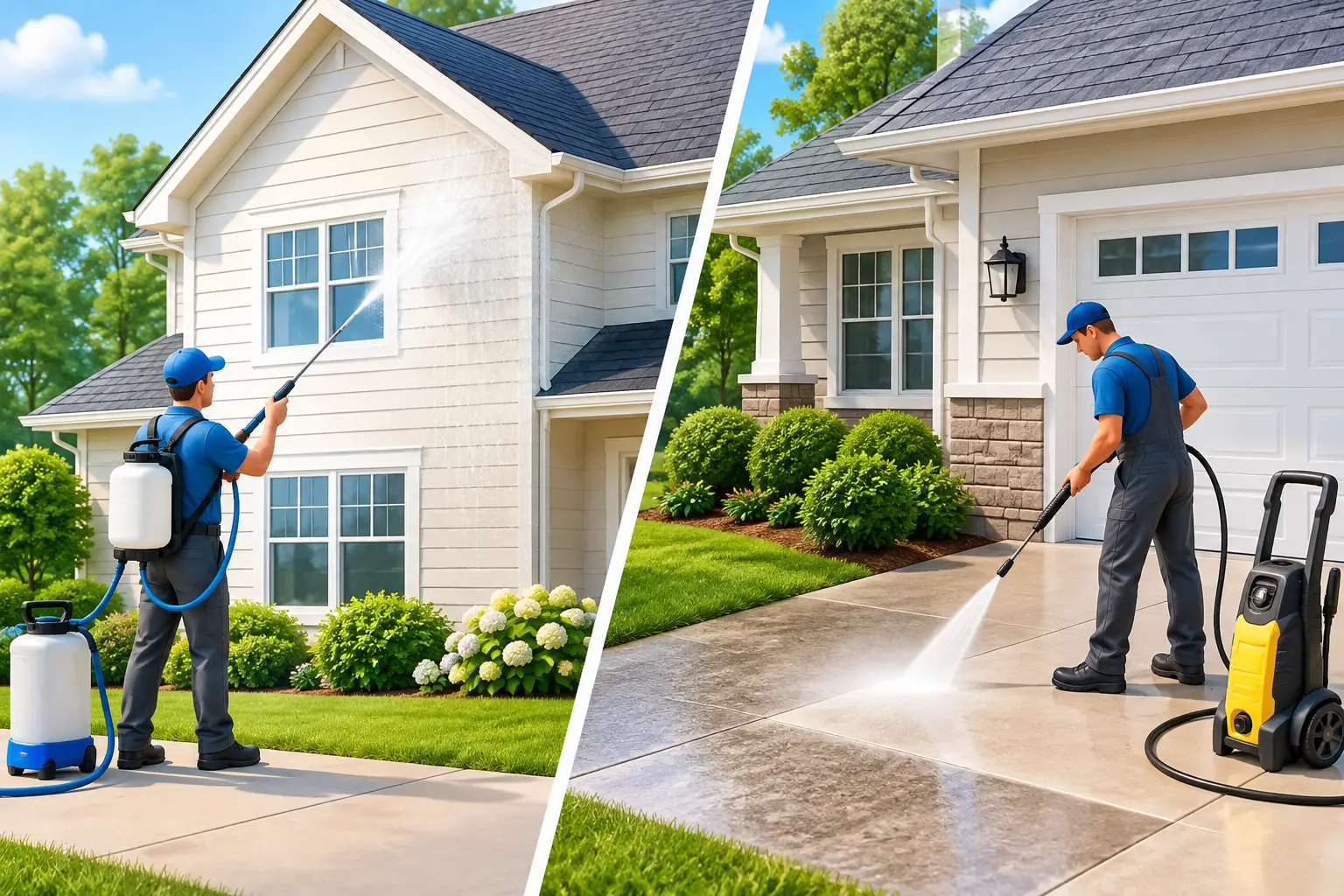
House washing is a complete exterior-cleaning method designed for the more delicate surfaces of a building. It commonly uses a low-pressure water application with a suitable cleaning solution to loosen mould, lichen, dirt, salt residue, cobwebs, and atmospheric grime. The solution does much of the work, while the gentle rinse removes the contamination without driving water into joins or stripping finishes.
Pressure washing uses a much stronger, more concentrated water stream. It is highly effective on durable hard surfaces, particularly concrete, pavers, paths, driveways, retaining walls, and some decks. On the wrong surface, however, high pressure can scar timber, lift paint, etch soft masonry, damage seals, or force water behind cladding.
Put simply, house washing is about careful exterior care for the building itself. Pressure washing is primarily about restoring hard exterior surfaces. A professional may use both methods during one property clean, but they should not be treated as interchangeable.
When a House Wash Is the Better Choice
A low-pressure house wash is generally the safer option for painted weatherboards, vinyl cladding, fibre cement, brick, render, soffits, fascia boards, gutters, window frames, and exterior joinery. These areas can collect moisture-loving growth and road dust over time, especially in shaded locations or coastal suburbs where salt spray is a factor.
It is also the right approach when you want to preserve paintwork. Paint can appear dull because of surface contamination rather than because it has failed. A gentle wash can lift that build-up and freshen the exterior, helping you delay unnecessary repainting. It cannot repair peeling paint or rotten timber, but it can reveal the real condition of a surface so maintenance decisions are clearer.
For landlords and property managers, house washing is useful before marketing a rental, a routine property inspection, or handover between tenancies. A clean exterior gives prospective tenants confidence that the property is cared for. It also helps prevent mould and lichen from becoming more stubborn and costly to remove later.
When Pressure Washing Makes Sense
Pressure washing is the practical choice for hard-wearing surfaces that receive foot traffic, vehicle traffic, mud, leaf tannins, oil residue, and ingrained dirt. Concrete driveways and paths can become slippery when algae settles in damp spots. Careful pressure cleaning improves their appearance and can make access around the home safer.
Patios, paved areas, brick retaining walls, and many concrete pool surrounds may also respond well to pressure washing. The correct pressure, nozzle, angle, and distance will depend on the material and its condition. Older pavers, loose mortar, cracked concrete, exposed aggregate, and poorly sealed surfaces need extra care.
Timber decks sit in the middle. They may benefit from controlled pressure cleaning, but too much force can raise the timber grain, leave visible lines, or reduce the life of a protective coating. Often, a specialist cleaner, lower pressure, and a measured rinse produce a better result than attempting to blast the deck clean.
Why High Pressure Can Damage a House
The temptation to use a high-pressure cleaner on every exterior surface is understandable. The immediate visual effect can be dramatic. Yet water under excessive pressure can create problems that are not obvious until later, including moisture behind cladding, damaged window seals, chipped paint, and disturbed pointing around brickwork.
Older homes require particular care. Weathered paint, ageing timber, brittle sealants, and previous repairs may not tolerate aggressive washing. Some exterior finishes also hold moisture in small cracks or overlaps, making a high-pressure spray risky even when the surface initially looks sound.
A quality service begins with an assessment, not with turning the machine to its highest setting. The operator should identify the cladding type, note vulnerable areas, select suitable products, and adjust the cleaning method for the property. That judgement is what separates an effective clean from an expensive repair job.
Cleaning Products Matter as Much as Water Pressure
Neither house washing nor pressure washing is simply about water. Exterior cleaning products help break down organic growth and grime so the required water pressure can remain lower. For a house wash, this is central to achieving a consistent finish across cladding, eaves, gutters, and exterior trim.
The product choice should suit the surface and the level of contamination. A home with light dust needs a different treatment from a shaded property with persistent mould and lichen. Professionals should also manage runoff carefully and take sensible precautions around gardens, lawns, outdoor furniture, pets, and nearby drainage.
Eco-conscious product options can be valuable, but gentle does not mean ineffective. The right approach balances cleaning performance with responsible property care. If a strong treatment is needed for heavy organic growth, proper application, dwell time, and rinsing are more important than applying extra pressure.
How Often Should You Clean Exterior Surfaces?
Most homes benefit from an exterior wash every 12 to 18 months. Properties near the coast, under large trees, beside busy roads, or in damp and shaded areas may need attention more often. Wellington wind can deposit salt and dirt, Auckland humidity can encourage mould, and Hamilton properties may experience stubborn growth in sheltered locations.
There is no need to wait until the cladding looks visibly dirty. Regular cleaning removes the contamination that slowly affects paint finishes, outdoor surfaces, and kerb appeal. It is usually easier and gentler to maintain a property routinely than to restore years of built-up grime in one visit.
Pressure cleaning for driveways and paths often follows a similar schedule, although the best timing depends on shade, traffic, drainage, and whether surfaces become slippery. If people regularly walk across the area, safety should take priority over a fixed calendar.
Preparing for a Professional Exterior Clean
A little preparation helps the team work efficiently and protects your belongings. Move lightweight outdoor furniture, toys, and pot plants where practical, close all windows, and let the cleaner know about known leaks, damaged cladding, delicate areas, or electrical fittings. If access is restricted by gates, pets, or parked vehicles, arranging this beforehand avoids delays.
For commercial premises, the same principle applies. Pressure cleaning paths, entrances, and service areas can often be scheduled to reduce disruption to staff, customers, and deliveries. A tailored plan is particularly useful for hospitality, healthcare, and retail sites where presentation and safe access matter every day.
Choosing a Service You Can Trust
The best provider will explain the proposed method rather than offering a one-size-fits-all clean. Ask whether they use low-pressure washing for cladding, how they protect plants and windows, whether they are fully insured, and what happens if you are not happy with the outcome. Clear answers are a sign of accountable service.
Clean Bees provides customised exterior cleaning plans for homes, rentals, and commercial properties across Auckland, Hamilton, and Wellington. Certified, experienced, and fully insured teams assess the surfaces before work begins, with quality supervision and a 100% Satisfaction Guarantee for added confidence.
Your exterior does not need the harshest treatment to look cared for. Choosing the right cleaning method protects the surfaces you have invested in, keeps entrances safer, and gives your property the fresh, well-maintained appearance it deserves.