


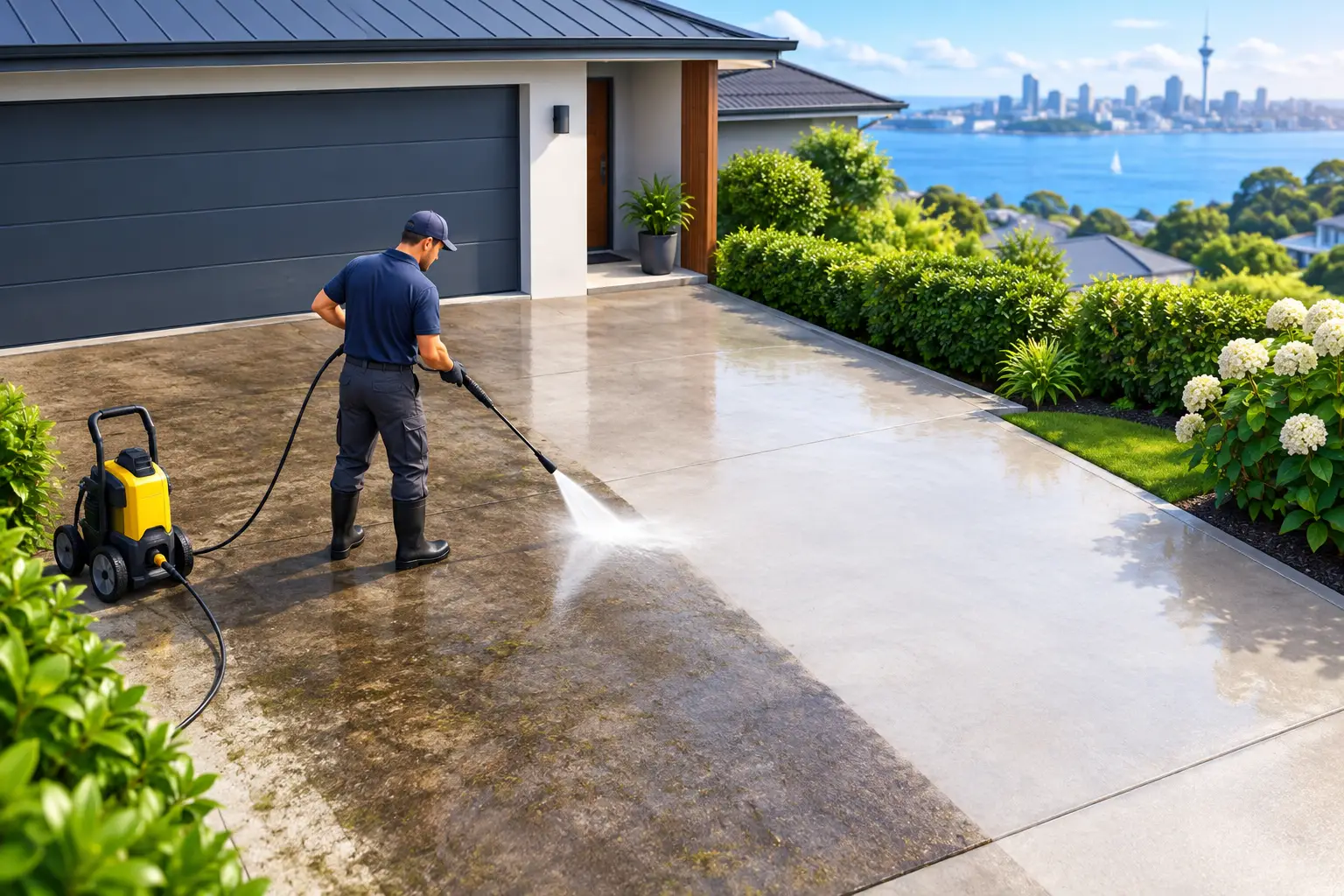
A driveway can look tired long before the rest of a property does. Tyre marks settle into concrete, damp corners turn green, and Auckland rain keeps grime in place. Professional driveway pressure washing Auckland homeowners arrange is not simply about making concrete look brighter – it is about restoring safer access, improving street appeal and treating each surface with the right level of care.
For a family home, rental, commercial entrance or shared apartment accessway, a clean driveway sets the standard before anyone reaches the front door. The right cleaning approach removes built-up dirt without needlessly damaging concrete, pavers, exposed aggregate or surrounding landscaping.
Why Auckland driveways become slippery and stained
Auckland’s wet weather, humidity and shaded sections create ideal conditions for mould, moss, algae and lichen. These growths are often most noticeable along the edges of a driveway, beside fences, under trees and anywhere water takes longer to dry. What starts as a dull green film can become slippery when wet, particularly on sloped concrete, paths and entry steps.
Vehicle use adds another layer of mess. Oil drips, tyre residue, mud and road grime can leave marks that ordinary hosing will not shift. Rust staining from outdoor furniture, fertiliser or metal fixtures may also need a more considered treatment than high-pressure water alone.
The result is not always just cosmetic. A slippery driveway can create a safety concern for children, visitors, tenants, delivery drivers and older family members. For landlords and property managers, it can also make an otherwise well-maintained rental appear neglected at an inspection or viewing.
What professional driveway pressure washing Auckland services involve
Effective driveway cleaning begins with assessment, not with turning a machine to maximum pressure. A professional team checks the surface material, the age and condition of the concrete, drainage points, nearby garden beds and the type of staining present. This determines the safest method and whether a targeted pre-treatment is needed.
Loose leaves, rubbish and surface debris are cleared first. A suitable cleaning solution may then be applied to help lift organic growth or stubborn grime. The driveway is pressure washed in controlled sections, keeping the finish even and reducing the striped appearance that can happen when cleaning is rushed.
The pressure setting matters. Dense, sound concrete can usually handle a more intensive clean than older concrete with cracks, soft mortar joints or decorative pavers. Exposed aggregate needs particular care because excessive pressure can dislodge loose stones or leave the surface looking patchy. For this reason, the goal is never simply the highest pressure possible. It is a thorough clean that protects the material underneath.
A final rinse clears residue and helps reveal areas that need extra attention. Professionals should also manage wash water responsibly, keeping it away from doors, garages and vulnerable garden areas where practical.
The difference a clean driveway makes
A freshly cleaned driveway immediately lifts the appearance of an entire property. Concrete often looks lighter once the dark layer of moisture, dust and biological growth has been removed. Pavers regain definition, and the edges between the driveway, lawn and garden look more orderly.
There is a practical benefit too. Removing algae and moss improves grip underfoot, especially after rain. That is valuable at any home, but particularly where the driveway doubles as the main walkway from the car to the front door.
For rentals, driveway cleaning can support a smoother handover. It helps present the exterior well for routine inspections, open homes and new tenants. For businesses, a clean entrance signals care and professionalism before clients, staff or suppliers walk inside. The work can usually be scheduled to minimise disruption, including outside normal operating hours where appropriate.
Is DIY pressure washing enough?
Hiring or buying a pressure washer can make sense for light maintenance on a small, sound concrete area. It is useful for rinsing away recent mud or loose surface dirt, provided the operator understands the equipment and keeps the nozzle moving. But it has limits.
A common DIY mistake is holding the spray too close to the surface or using a narrow jet to chase a stubborn spot. This can etch concrete, remove the top layer of cement paste, damage pavers and create obvious clean lines that are difficult to blend back in. High pressure can also force water beneath loose pavers or into cracks.
Another issue is treating all stains the same way. Water pressure alone may not remove oil, rust or ingrained biological staining. Using the wrong chemical product can discolour the surface, harm nearby plants or leave a slippery residue.
Professional cleaning is usually the better option when the driveway is large, heavily stained, steep, near landscaping, made from delicate materials or being prepared for an inspection or sale. It also saves time. Instead of spending a weekend moving equipment, managing runoff and redoing uneven areas, property owners can have the job completed with a clear plan and appropriate equipment.
How often should a driveway be cleaned?
There is no single schedule that suits every Auckland property. A sunny, open driveway may only need a professional clean every 12 to 18 months. A shaded property with mature trees, frequent vehicle traffic or poor drainage may benefit from cleaning every six to 12 months.
Watch for the early signs rather than waiting until the surface is very dark. Green growth, black spotting, a slick feel after rain, visible tyre marks and weeds pushing through paver gaps all suggest it is time to arrange maintenance. Regular cleaning is generally easier on the surface and more cost-effective than allowing staining to build up for several years.
It can be sensible to coordinate driveway pressure washing with other exterior work, such as house washing, gutter cleaning, roof cleaning, window cleaning or garden tidy-ups. Booking related tasks together reduces the hassle of arranging multiple visits and helps the whole property look consistently cared for.
Preparing your property for the cleaning visit
A little preparation helps the work go smoothly. Move vehicles from the driveway and remove portable items such as pot plants, bins, outdoor furniture and children’s toys. Keep pets inside or in a secure area while cleaning is underway, and let the team know about any fragile paving, existing cracks, drainage concerns or sensitive plants.
If access is through a locked gate, organise entry in advance. For commercial properties and shared complexes, it is worth notifying residents, staff or customers that the area may be temporarily unavailable. Clear communication prevents vehicles from driving across the surface before the job is complete.
After cleaning, allow the driveway to dry fully before walking or driving on it where possible. Drying time depends on the weather, shade and surface type. A professional team can advise on what to expect for your specific property.
Choose care that protects the whole property
The best results come from more than powerful equipment. They come from experienced operators who recognise the difference between an oil mark and algae, adjust the process to the material, arrive when agreed and check the finished area properly. Insured, trained professionals also provide greater reassurance when work is taking place around vehicles, gardens, entrances and occupied homes.
Clean Bees provides customised exterior cleaning support for Auckland properties, with certified, experienced and fully insured professionals, supervisor-led quality checks and a 100% Satisfaction Guarantee. Whether the priority is a safer family entrance, a rental ready for inspection or a more welcoming business frontage, the service can be planned around the property and your schedule.
A clean driveway is one of the simplest ways to make a property feel looked after. Address the first signs of grime and slippery growth, and the path from the street to your door stays safer, cleaner and more welcoming through Auckland’s changing weather.