

A small patch of mould around a bathroom window can quickly become a stressful rental issue. Can tenants remove mould themselves? Often, yes – but cleaning the visible marks is not always the same as solving the problem. The right approach depends on how much mould there is, where it has appeared and, most importantly, what is causing the moisture.
For tenants in Auckland, Hamilton and Wellington, early action protects your health, your belongings and your relationship with the landlord or property manager. Take photos, clean minor surface mould safely where appropriate, and report recurring or widespread mould promptly. That creates a clear record and gives the property owner a fair opportunity to investigate the cause.
Can tenants remove mould in a NZ rental?
Tenants are generally expected to keep a rental reasonably clean and tidy. That can include wiping away a small amount of surface mould caused by everyday condensation, such as moisture on a bathroom ceiling after showers or around a window in winter.
However, tenants should not be expected to remedy mould caused by a building fault, water ingress, plumbing leak, inadequate drainage, damaged roofing, broken extraction fan or another property maintenance issue. A landlord has responsibilities around providing and maintaining a habitable home, including meeting applicable Healthy Homes Standards. The exact responsibility can depend on the tenancy agreement, the condition of the property and the cause of the mould.
The practical distinction is simple: tenants can manage day-to-day moisture and light surface growth; landlords or property managers need to address defects that let moisture in or prevent the home from drying properly. If you are unsure, report it rather than making assumptions. This is general guidance, not legal advice, and tenancy disputes may need independent advice.
Start by identifying the size and source
Mould is a symptom. It needs moisture, a surface to settle on and limited airflow. Cleaning it without finding the moisture source can mean it returns within days.
A few specks on silicone, a window frame or painted bathroom wall may be manageable with careful cleaning. A musty smell, bubbling paint, damp carpet, black spotting over a large area, mould inside cupboards, or growth that keeps returning points to a bigger concern. So does mould that appears after heavy rain or beneath a known leak.
Look for everyday sources first. Drying clothes indoors without ventilation, leaving the bathroom closed after a shower, cooking without lids or extractor use, and furniture pressed tightly against cold exterior walls can all increase condensation. Open windows briefly when conditions allow, use extractor fans, wipe condensation from sills and leave space for air to circulate behind beds, sofas and drawers.
If these sensible steps do not reduce the issue, notify the property manager or landlord in writing. Include dated photos, the rooms affected, when you first noticed it and whether there is a leak, damaged fitting or noticeable dampness. Keep a copy of the message and any reply.
How to remove a small amount of surface mould safely
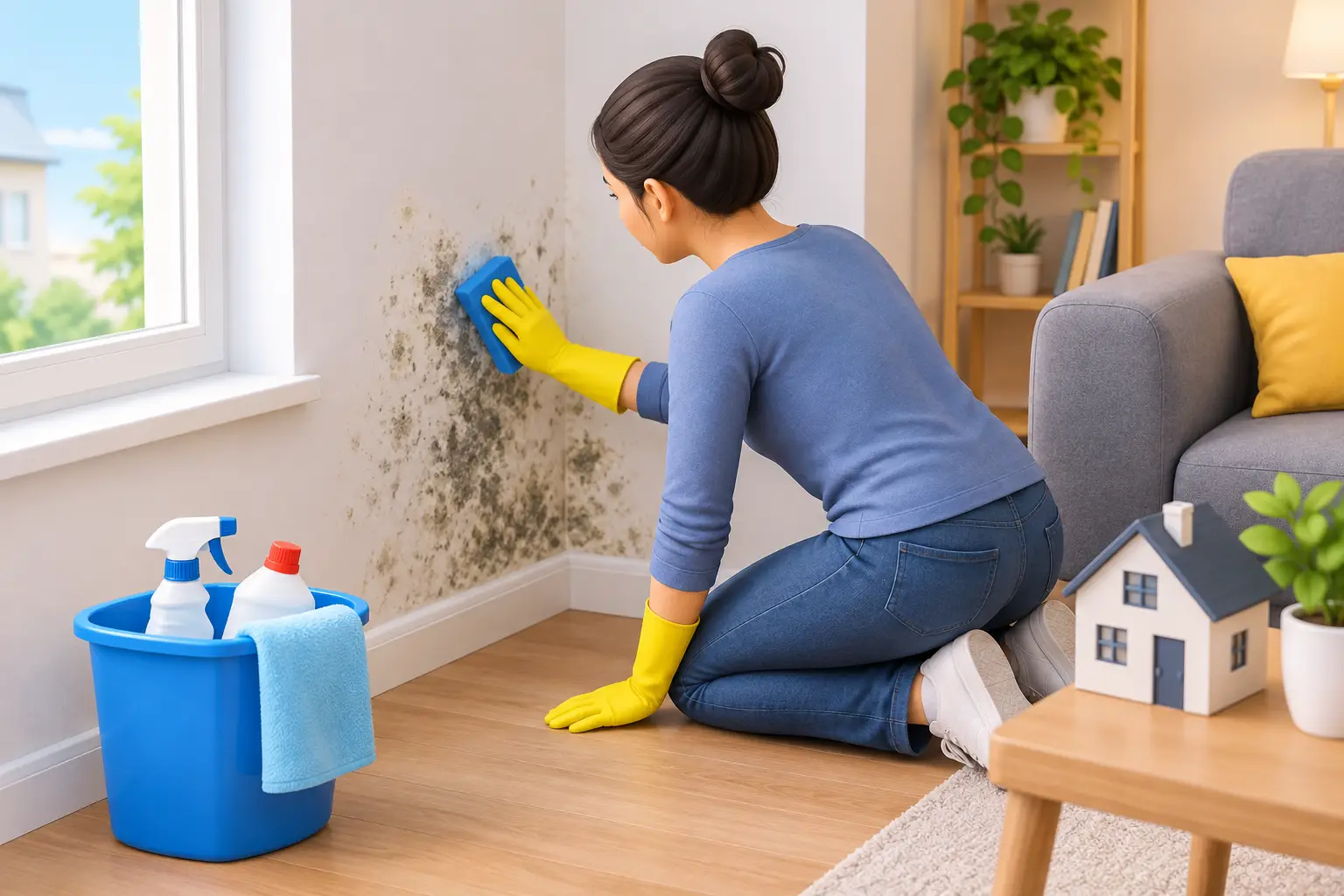
If the mould is limited to a small, accessible surface and there is no sign of an ongoing leak, careful cleaning may be suitable. Protect yourself first. Wear gloves, ventilate the room and avoid dry brushing or scraping, which can spread spores into the air.
Use a cleaning product suitable for the surface and follow its label instructions. A mild detergent solution can be appropriate for many washable hard surfaces. Never mix cleaning chemicals, particularly products containing bleach, as dangerous fumes can result. Test any product in a discreet spot before using it on painted walls, timber, fabric or grout.
Wipe the surface gently with a clean cloth, then dry it thoroughly. Put used disposable cloths in a sealed rubbish bag, or wash reusable cleaning cloths separately on a hot cycle where suitable. The key step is drying: mould is far less likely to return when the room is clean, ventilated and free from persistent condensation.
Be cautious with porous materials. Mould on carpet, mattresses, curtains, untreated timber, plasterboard or insulation can be difficult to remove completely, especially if it has penetrated beneath the surface. Do not paint over mould or try to conceal it before an inspection. It may trap moisture, worsen the damage and make the underlying cause harder to assess.
When tenants should stop cleaning and report it
Some jobs need a landlord-arranged repair, specialist treatment or both. Report the issue promptly if you notice any of the following:
- Mould covers more than a small isolated patch or returns soon after cleaning.
- There is a roof, plumbing, window, gutter or drainage leak, or a damp patch after rain.
- Walls, ceilings or flooring feel soft, stained, swollen or visibly damaged.
- The mould is affecting carpet, insulation, bedding or other absorbent materials.
- Someone in the household has asthma, allergies, a respiratory condition, reduced immunity, or is particularly vulnerable to poor indoor air quality.
A photo record is useful before cleaning and after any recurrence. It is not about assigning blame prematurely. It helps everyone see whether a simple cleaning task has become a maintenance problem requiring action.
Preventing mould without damaging the tenancy
Good ventilation and regular cleaning make a meaningful difference, but prevention should be realistic for the home you live in. During cold or wet weather, it may not be practical to keep windows open all day. Short bursts of ventilation can still help: open bathroom windows after showering, use the kitchen extractor while cooking and close internal doors to keep steam from moving through the home.
Use lids on pots, dry wet towels in a ventilated area and avoid packing wardrobes too tightly against outside walls. If you use a heater, follow its safety instructions and choose options that do not add unnecessary moisture to the room. A dehumidifier can reduce humidity, although it does not fix a leak or a poorly maintained property.
Keep vents and extractor grilles clear of dust where they are safely accessible. Do not block fixed ventilation openings with furniture, boxes or tape. If an extractor fan is noisy, ineffective or not working, report it. A functioning fan can be the difference between a bathroom that dries overnight and one that develops recurring mould.
What landlords and property managers should do
A good mould report deserves a timely response. Property managers and landlords should inspect the affected area, consider potential moisture sources and organise repairs where the property condition is contributing. Depending on the issue, this may involve repairing a leak, clearing defective drainage, improving ventilation, treating damaged materials or arranging professional cleaning.
For landlords preparing a property between tenancies, a quick wipe-down is rarely enough if mould has been recurrent. The source should be checked before new tenants move in. A clean, dry, well-presented home supports healthier living and reduces the risk of avoidable tenancy disputes.
Professional support can also be helpful before a final inspection, after water damage, or when mould has affected multiple rooms. Clean Bees provides insured cleaning support tailored to rental properties, with careful attention to visible mould, moisture-prone areas and the presentation standards expected at handover. Where a repair issue is suspected, cleaning should sit alongside – not replace – proper maintenance.
Keep the conversation clear and practical
Mould can feel personal, particularly when a tenant worries about a bond or a landlord worries about property damage. The most productive approach is factual: describe what you can see, when it appeared, what steps you have already taken and whether it has returned. Avoid waiting until the end of a tenancy if the issue is ongoing.
A fresh rental should also be a dry, comfortable place to live. Clean minor surface mould with care, report anything persistent or extensive, and focus on the moisture source rather than simply making the marks disappear.