
Clean Bees - Cleaning Company New Zealand

Why Outsourced Hospital Cleaning Improves Infection Outcomes

Why Outsourced Hospital Cleaning Improves Infection Outcomes

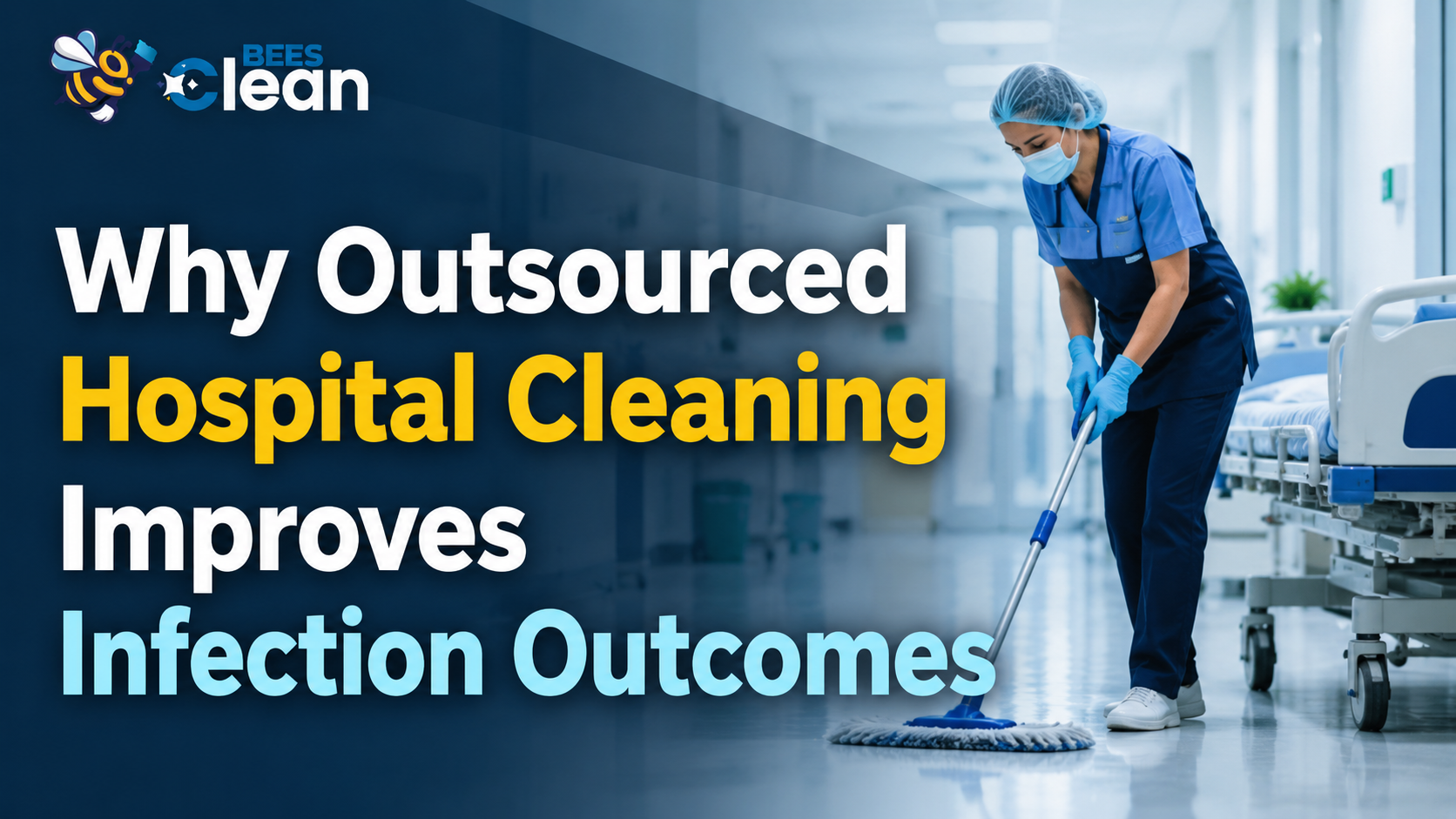
Why Outsourced Hospital Cleaning Improves Infection Outcomes – Hospitals are one of the most demanding places all around the world. The environment inside a hospital needs to be consistently clean, from bed rails to waiting room chairs, as it can carry serious pathogens that can harm vulnerable patients. Every surface inside a hospital needs to be maintained properly so it does not spread any Healthcare-Associated Infections (HAIs) further. While many hospitals rely on janitorial staff to maintain cleanliness. 

However, just the janitorial staff is not enough for a hospital, as it requires a deep cleaning service that can help with various types of concerns, such as the spreading of viruses, infections, and more. Moreover, the hospital cleaning service by Cleanbees stands out as one of the most effective solutions for infection control.

Therefore, in this blog, you will learn why outsourced hospital cleaning improves infection outcomes and how it has become such an effective strategy for infection control.

What is the Relationship Between Cleaning Standards and Infection Rates?

Infections acquired in hospitals do not happen by chance, but are caused by infected surfaces, inadequate hand hygiene practices, and improper sanitation. Studies conducted in the field of infection control have documented that high-contact surfaces, such as medical equipment, door knobs, bed rails, or calling buttons, transmit bacteria such as MRSA, difficile, and more.

Cleaning is more than just a visual change, as it is something really necessary that looks after infection prevention policies in the hospital environment. If the cleaning is not done according to proper standards, it might prevent the elimination of pathogens.

This is exactly where outsourcing hospital cleaning makes a measurable difference.

How Has Outsourced Cleaning Performed Better?

There are various valid reasons listed that tell us why outsourced hospital cleaning stands out as one of the most effective ways to control infection and maintain hygiene. Some of the major reasons are listed below:

1. Specialised Training and Protocols

Professional cleaning companies that service healthcare facilities invest heavily in training their staff on infection control standards. Unlike general facility staff who may split their time across multiple duties, outsourced cleaning teams are trained specifically in:

  • Correct disinfectant dilution ratios and dwell times
  • Colour-coded cleaning systems to prevent cross-contamination
  • Terminal cleaning procedures for isolation rooms
  • Safe handling and disposal of biohazardous waste
  • Personal protective equipment (PPE) protocols

This focused expertise means cleaning is performed to a consistent, evidence-based standard every single time — not dependent on how experienced or attentive one particular staff member happens to be.

2. Consistency Across Shifts and Locations

One of the biggest challenges hospitals face internally is maintaining consistent cleaning quality across different shifts, departments, and buildings. Outsourced providers operate with standardised checklists, supervision structures, and quality audits that apply the same rigorous approach regardless of which team member is on site or what time of day it is.

  • Standardised checklists reduce the risk of missed high-touch areas
  • Supervisors conduct regular quality audits and spot checks
  • Reporting systems flag issues immediately rather than after an outbreak

This consistency is critical because infection control only works if it’s applied every time, not most of the time.

3. Access to Hospital-Grade Products and Equipment

Outsourced cleaning companies typically have access to commercial-grade disinfectants, equipment, and technology that may not be economically feasible for a hospital to manage in-house. This includes:

  • Hospital-grade disinfectants approved for use against resistant pathogens
  • Microfiber cleaning systems that reduce cross-contamination
  • UV disinfection or electrostatic sprayers in high-risk areas
  • Proper colour-coded equipment for different zones (wards, theatres, bathrooms)

Because these providers work across multiple healthcare sites, they’re also better positioned to stay updated on the latest products and techniques as infection control guidelines evolve.

4. Accountability Through Reporting and Audits

A major advantage of outsourced cleaning is the structured accountability it brings. Reputable providers offer:

  • Documented cleaning logs for compliance purposes
  • Regular supervisor check-ins after each shift
  • Immediate escalation processes for missed areas or complaints
  • Performance reviews tied to measurable hygiene standards

This level of documentation supports hospital compliance requirements and gives administrators clear visibility into cleaning performance — something that’s often harder to track with informal in-house arrangements.

5. Flexibility Without Compromising Standards

Hospitals operate around the clock, and cleaning needs can shift quickly — an isolation room may need urgent terminal cleaning, or a ward may require additional attention during flu season. Outsourced providers are built to scale and adapt:

  • Rapid response for urgent or unplanned cleaning needs
  • Flexible rostering across evenings, weekends, and public holidays
  • Ability to increase staffing during outbreaks or high-occupancy periods
  • Coverage that doesn’t interrupt daily hospital operations

This flexibility ensures that infection control standards are maintained even during periods of high demand, without placing extra strain on clinical staff.

What to Look for in an Outsourced Hospital Cleaning Partner?

Not every cleaning company has the right equipment to deal with medical environments. Hospitals and clinics need to consider some aspects when choosing their cleaning partner; some of the important points to look for are:

  • Evidence of past experience with hospital cleaning
  • Well-trained, insured, and background-checked staff
  • Proper infection control practices that meet the regulations set by health authorities
  • Standardised checks and follow-up procedures
  • Following cleaning protocols and using high-quality equipments

A cleaning provider that does not show all of these common points is not the best pick for your healthcare facility.

How is Cleaning Related to Patient Care?

It is quite simple to differentiate between cleaning and medical care of the patients. However, cleaning is also related to patient care, and it should be practiced together in hospitals to maintain hygiene. Some of the reasons that make cleaning and medical care closely related in hospitals are:

  • Every disinfected surface helps in reducing harmful bacteria and viruses, ensuring a healthier environment for patients. 
  • Every isolation area needs to be clean, as it can help in preventing cross-contamination and maintaining infection control.
  • Every place that is regularly touched by patients needs to be sanitised properly to minimise the risk of infections.
  • Outsourcing hospital cleaning does not replace regular cleaning but ensures a deeper cleaning. 

Conclusion

Places like hospitals and clinics need more than ordinary cleaning. These establishments need plenty of qualified people, standardized procedures, and defined obligations. Hospital cleaning ensures all of that by combining specialized knowledge and regular systems that cut down the risk of health-associated illnesses. Therefore, an effective hospital cleaning service is not just about efficiency, but is rather related to the case of patient safety as well.

At Clean Bees, our team of cleaning experts understands what healthcare requires and ensures effective deep cleaning services. Moreover, with services such as hospital cleaning and infection control services, hospital ward and patient room support, and hospital general support duties, we ensure additional support along with maximum infection control inside the facility.

Frequently Asked Questions: 

1) Why is outsourced hospital cleaning better than regular janitorial cleaning?

Outsourced hospital cleaning teams are trained in infection control, use hospital-grade disinfectants, and follow strict cleaning protocols, making them more effective at reducing the risk of Healthcare-Associated Infections (HAIs).

2) How often should hospital areas be deep cleaned?

High-touch areas should be disinfected multiple times daily, while patient rooms, isolation wards, and critical care areas should receive scheduled deep cleaning based on healthcare guidelines and patient turnover.

3) What areas require the highest level of cleaning in a hospital?

Isolation rooms, operating theatres, ICUs, emergency departments, patient wards, bathrooms, waiting areas, and frequently touched surfaces such as bed rails, door handles, and medical equipment require the highest cleaning standards.

4) What services does Clean Bees provide for healthcare facilities?

Clean Bees offers hospital cleaning and infection control services, hospital ward and patient room support, hospital general support duties, and specialised deep cleaning tailored to healthcare environments.

5) Why should healthcare facilities choose Clean Bees?

Clean Bees provides trained cleaning professionals, proven infection control practices, quality assurance procedures, and flexible cleaning schedules to help hospitals maintain a safe and hygienic environment.

6) Can outsourced hospital cleaning help hospitals meet hygiene compliance requirements?

Yes. Professional cleaning providers follow documented procedures, maintain cleaning records, and adhere to healthcare cleaning standards, helping hospitals meet hygiene and infection control compliance requirements.

×

Send Enquiry