
Clean Bees - Cleaning Company New Zealand

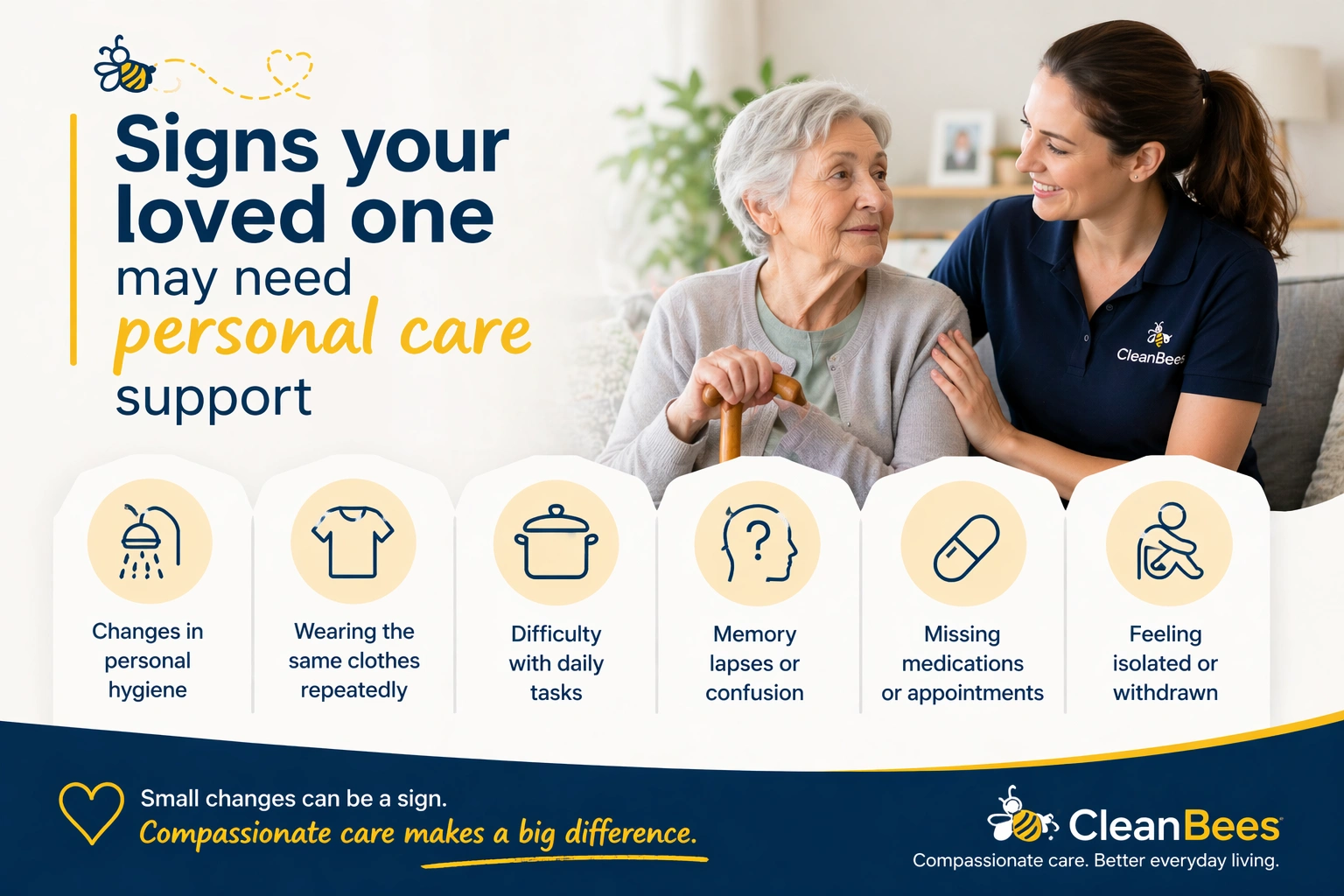
Signs your loved one may need personal care support

Senior receiving companionship and care support

Have you noticed some changes in your loved ones’ daily routine, behaviour, or health? Caring for your loved one is important, but managing their daily tasks regularly may become stressful. If you are noticing signs that your loved one may need personal care support, then support them in daily activities to ensure they are safe, happy, and healthy. Many families are not able to catch those signs on time because they are unsure, feel guilty for requesting help or don’t have ideas which signs to look for.

In this blog, you will know about the early warning signs so you can make the right decision at the right time to ensure your loved ones’ comfort, dignity, and well-being.


What Is Personal Care Support?

Personal care support is given by a professional assistant, who helps individuals to manage their daily activities safely and comfortably at their home. A personal carer is essential for those individuals who are not able to do their daily tasks, such as aged adults or individuals recovering from illness or health issues. They help individuals with:

  • Helping with bathing, dressing, and hair grooming.
  • Preparing meals and providing feeding assistance.
  • Reminding them of medication.
  • Supporting them on mobility.
  • Providing them companionship and emotional support.

Best Signs your loved one may need personal care support - April 2026

Why Recognising the Signs Early Is Important?

Spotting the earlier signs, which indicate your loved ones may need personal care support, can make a difference in their quality of life. This is important for these reasons.

  • Reduce the risks of accidents: Timely support might reduce the risks of falls, medication errors, or physical injuries.
  • Health protection: You can easily spot small issues before converting to major issues.
  • Free from stress: Early spotting helps you and your loved ones to experience less emotional strain.
  • Maintain independence: Early personal support helps individuals to live happily in their home.

Ignoring early signs might lead to serious issues, which can be prevented with the right care.

10 Signs that Indicate Your Loved One May Need Personal Care Support:

If you understand these 10 signs, then you can easily take timely action to help your loved one.

1. Difficult to manage daily tasks:

If you notice your loved one is struggling to perform daily activities such as cooking, personal hygiene, or dressing, then it indicates they need personal care support.

2. Decline in personal hygiene:

If you see changes in personal hygiene, like wearing the same clothes repeatedly, keeping things unmanaged, or changes in body odour.

3. Frequent mobility issues:

Spotting mobility issues in individuals, such as walking difficulty, body balancing issues, or frequent falling issues, may indicate they need a personal caretaker.

4. Memory problem:

If your loved one frequently forgets tasks, looks confused, and continuously misses the medication schedule, then it is a sign that they strongly require support.

Best Signs your loved one may need personal care support - April 2026

5. Unexplained weight loss:

If someone is skipping meals, losing body weight, or has an empty fridge, then it indicates that they are struggling to maintain a healthy diet.

6. Behaviour changes:

If your loved one refuses to participate in social activities, live alone, or experience anxiety, then it indicates the individual is emotionally depressed.

7. Difficult to manage medication schedule: 

If you observe your individual is taking the wrong medicine dose, skipping the medication schedule, or is confused about the medicine prescription, then it is a clear sign they need support.

8. Unsafe living environment:

An unhealthy environment, unpaid bills, or neglected household tasks may be the signals that your loved one is stressed and unable to maintain a clean environment.

9. Increased dependence on others:

If they frequently call someone for help, even for small tasks or lying heavily, then it may require consistent care.

10. Care taker burnout:

In some cases, if the carer is stressed, exhausted, or emotionally drained, then they cannot properly support any individuals. It indicates that you may need additional care support.

When Should You Take Action for Care Support?

Many families take too long to take action because the earlier stage looks common, but it becomes a bigger problem later. You can take action when you see multiple warning signs together, sudden changes in health or behaviour, high safety risks, and consistently struggling in daily activities.

Which Types of Personal Care Support are Available in New Zealand?

There are several types of personal care services available in New Zealand to meet different needs and requirements. Some of them are.

  • Personal home care: Provides support at home with daily activities.
  • Emotional support services: They provide companionship services through conversation, activities, and social interaction to maintain emotional well-being.
  • Respite care services: They provide temporary relief to the family caregiver and allow them to refresh.

There are multiple short-term and long-term care services available in New Zealand. If you want to hire a professional caretaker for your loved one, then choose a trusted service provider.

Quality Signs your loved one may need personal care support - April 2026

Conclusion:

When you recognise the signs your loved one may need personal care support, then take timely action to ensure their well-being and safety. We all know that it is emotionally challenging to make a decision, but an early decision may prevent major complications and improve your loved one’s quality of life. You don’t have to go through this alone. Discuss issues with your loved one, and if they agree, hire a professional caretaker from a trusted services provider.

FAQs Regarding the Signs Your Loved One May Need Personal Care Support:

Q1. What is the main difference between personal care and home care?

Ans: A personal caretaker supports you in daily physical needs such as personal hygiene, mobility, or meal preparation. While home care provides broader support, such as housekeeping, companionship, or meal preparation.

Q2. How do I know my loved one needs a caretaker?

Ans: If you spot your loved one is struggling to perform their own daily tasks, missing their medication schedule, facing mobility issues, or showing behaviour changes, then it clearly indicates they need support.

Q3. What is the average cost of hiring a personal caregiver in New Zealand?

Ans: The average cost of hiring a personal caretaker is around $25 to $40 per hour. The price may change depending on location, service provider, and level of care.

×

Send Enquiry